Borrowed Workforce, Full Liability: What Nevada Employers Must Understand About Contractor Safety Accountability
Nevada's economy runs on flexibility. From the construction crews reshaping the Las Vegas skyline to the hospitality staffing agencies filling hotel floors along the Strip, and the contract laborers cycling through mining operations in Elko County, the use of non-employee workers has become standard practice across the state's largest industries. It is also becoming one of the most underexamined sources of workplace safety liability.
The assumption that safety obligations end where the employment relationship ends is not only legally incorrect—it is a posture that has cost Nevada employers significantly in citations, penalties, and litigation. The regulatory framework governing contractor safety is more expansive than many business owners realize, and the practical gaps between what employers believe they are responsible for and what regulators actually hold them accountable for can be substantial.
Who Is Responsible When a Contractor Gets Hurt?
The short answer is: it depends—but often, more than one party shares the burden. The Occupational Safety and Health Administration (OSHA) applies a "controlling employer" doctrine that extends safety obligations beyond direct employment. Under this framework, a host employer can be cited for hazards affecting contract workers if that employer created the hazard, had the authority to correct it, or was responsible for the worksite conditions under which the contractor operated.
Nevada operates its own state-level occupational safety program through the Nevada Occupational Safety and Health Administration (Nevada OSHA), which enforces standards that meet or exceed federal requirements. Nevada OSHA applies similar multi-employer worksite principles, meaning that businesses in Nevada cannot simply point to a staffing agency or subcontractor agreement and expect to be absolved of responsibility when something goes wrong.
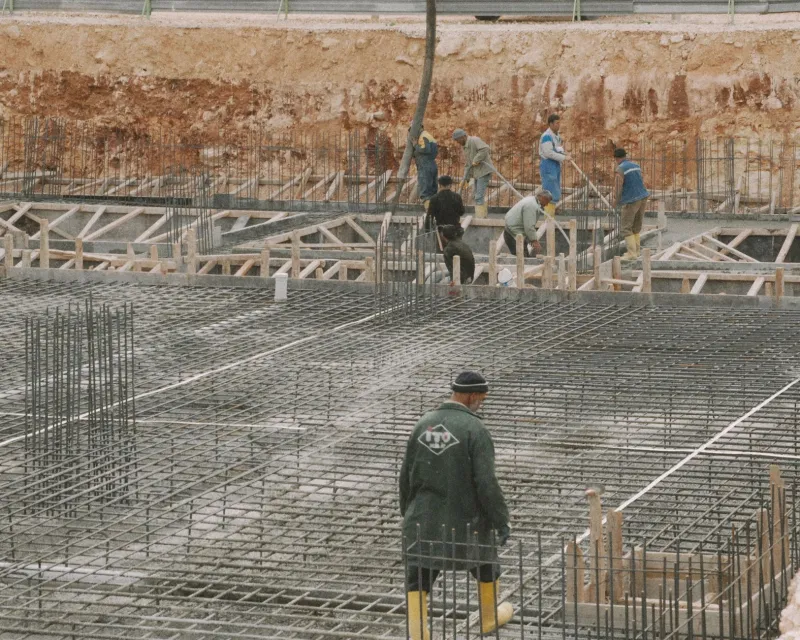
In construction—one of Nevada's most active and hazardous industries—multi-employer liability is especially prominent. A general contractor overseeing a project in Henderson or Reno may face citations for conditions created by a subcontractor's crew if the general contractor had supervisory authority over the site and failed to exercise reasonable oversight.
The Staffing Agency Gray Zone
Staffing arrangements introduce a layered accountability structure that many employers have not fully mapped. When a Nevada business brings on workers through a staffing agency, both the agency and the host employer may carry concurrent safety obligations. The agency, as the formal employer of record, is generally responsible for general safety training, workers' compensation coverage, and ensuring workers are not placed in roles they are unqualified for. The host employer, however, is typically responsible for site-specific hazards, day-to-day supervision, and the conditions under which the temporary worker actually performs the job.
The problem is that these responsibilities are frequently left undefined. Contracts between staffing agencies and host employers often lack specific language about who provides what training, who conducts safety orientations, and who is responsible for reporting injuries. When a temporary worker is injured, that ambiguity does not protect either party—it simply creates a dispute about who failed first.
Nevada businesses in hospitality, warehousing, and light manufacturing have encountered this situation with increasing frequency. A hotel bringing in banquet staff through an agency for a large convention, or a distribution center using temporary workers during peak season, may not have established any formal safety onboarding protocol for those individuals. If an injury occurs on day two of a temporary assignment, the absence of documented training becomes a liability issue for the host employer regardless of what the staffing contract says.
High-Risk Industries Face Heightened Scrutiny
Certain sectors in Nevada face particular regulatory attention when contractor relationships are involved. Mining operations in rural Nevada, which already operate under stringent Mine Safety and Health Administration (MSHA) oversight in addition to Nevada OSHA requirements, must be especially deliberate about contractor integration. Contract workers entering mine sites are subject to the same hazard exposure as direct employees, and mine operators are expected to ensure those workers receive site-specific safety training before beginning work.
Construction sites across the Las Vegas Valley and northern Nevada present similar challenges. The pace of development, combined with high subcontractor turnover and the use of day laborers, creates conditions where safety orientation is frequently rushed or skipped entirely. Nevada OSHA has historically cited construction employers for fall protection violations, inadequate hazard communication, and failure to ensure contractor workers are equipped with proper personal protective equipment—all situations where the host employer's obligation extended to non-employees on the site.
In the hospitality sector, the risks are less dramatic but no less real. Ergonomic hazards, chemical exposure from cleaning products, and slip-and-fall risks affect temporary and contract workers just as they affect permanent staff. Because these workers may not receive the same onboarding as full-time employees, they are often less aware of site-specific protocols and more vulnerable to preventable incidents.
Building a Contractor Safety Framework That Holds Up
Nevada employers who rely on contractors or staffing agencies should treat contractor safety integration as a formal operational process, not an informal assumption. Several practical steps can meaningfully reduce both regulatory exposure and actual injury risk.
Define responsibilities in writing. Every staffing agreement or contractor engagement should include explicit language specifying who is responsible for general safety training, site-specific orientation, PPE provision, incident reporting, and corrective action authority. Vague contracts do not protect anyone; they simply delay the dispute.
Conduct site-specific safety orientations for all non-employees. Regardless of what training a staffing agency provides, host employers should deliver an orientation covering the specific hazards present at their worksite. This should be documented with a signature and date, and retained as part of the employer's safety records.
Extend safety oversight to contractor supervisors. If a subcontractor brings their own foreman or crew lead, that individual should be integrated into the host employer's safety communication structure. Regular toolbox talks, pre-shift briefings, and hazard walkthroughs should include contractor supervisors, not just direct employees.
Apply the same reporting requirements to contractor injuries. Nevada OSHA recordkeeping standards apply to injuries sustained by workers under the employer's day-to-day supervision, which can include temporary and contract workers depending on the nature of the arrangement. Employers should consult with a compliance professional to confirm which injuries must be recorded and reported.
Audit contractor safety performance proactively. Before renewing a staffing arrangement or awarding a subcontract, Nevada employers should review the contractor's safety record, request documentation of their own training programs, and evaluate whether their safety culture is compatible with the host worksite's standards.
The Compliance Calculation
Some Nevada employers view contractor safety integration as an added administrative burden—a responsibility that rightfully belongs to the agency or the subcontractor. Regulators and courts do not share that view. The controlling employer doctrine, combined with Nevada's own multi-employer worksite interpretations, means that host employers bear meaningful accountability for the safety of everyone working on their premises or under their operational direction.
The cost of getting this wrong is not abstract. Nevada OSHA penalties for serious violations can reach thousands of dollars per citation, and willful violations carry substantially higher exposure. Beyond regulatory penalties, an injured contractor worker may have civil remedies that extend beyond workers' compensation, particularly if the host employer's negligence contributed to the incident.
Building a contractor safety framework is not simply a compliance exercise. It is a recognition that the workforce a Nevada business depends on—regardless of how it is classified on paper—deserves the same standard of protection as any other worker on the premises. In an economy as contractor-dependent as Nevada's, that recognition is also sound business practice.