Industry by Industry: Safety and Compliance Checklists for Nevada's Largest Employment Sectors

Nevada's workforce is as diverse as its geography. The same state that hosts one of the world's largest concentrations of hospitality workers also employs thousands of miners, construction tradespeople, and outdoor recreation professionals. Each of these sectors operates under distinct regulatory frameworks, faces unique hazard profiles, and confronts compliance challenges shaped by Nevada's climate, terrain, and economic character.
The following checklists are designed to help employers and safety officers in Nevada's major industries assess their compliance posture, identify common gaps, and take targeted action before violations occur or workers are harmed.
Mining Operations
Nevada is the largest gold-producing state in the nation and ranks among the top producers of silver, lithium, and other critical minerals. Mining is foundational to Nevada's economy—and it is one of the most heavily regulated industries from a safety standpoint.
Mining operations in Nevada are subject to oversight from the Mine Safety and Health Administration (MSHA), not federal OSHA. This distinction is critical. MSHA standards apply to surface and underground mines and are enforced through mandatory inspections—twice annually for surface mines, four times annually for underground operations.
Compliance Checklist: Mining
- MSHA Part 46 or Part 48 Training: Confirm that all miners have completed required new miner training (24 hours for Part 46 surface miners) and that annual refresher training (8 hours) is documented and current.
- Dust Monitoring: Implement a written respirable dust control plan. Silica exposure is a leading long-term health hazard in Nevada mining environments. Sampling records must be maintained.
- Explosive Materials Compliance: Verify that storage, handling, and use of blasting agents comply with MSHA's 30 CFR Part 57 (underground) or Part 56 (surface) requirements. Blasting licenses for designated personnel must be current.
- Ground Control Plans: Written ground control plans are mandatory for underground operations. Review and update these plans whenever mining conditions change.
- Emergency Response Plans: Each mine must have a written emergency response plan (ERP) that includes evacuation procedures, refuge chamber locations (for underground operations), and communication protocols. Conduct drills at required intervals.
- Hazardous Materials Inventory: Maintain current Safety Data Sheets (SDS) for all chemicals on site and ensure workers are trained on hazard communication.
- Equipment Inspections: Document daily pre-operational inspections for all mobile equipment. Deficiencies must be corrected before equipment is placed in service.
Common Violation Pitfalls: Incomplete training records are among the most frequently cited MSHA violations in Nevada. Maintaining organized documentation—not just conducting training—is essential. Additionally, failure to update emergency response plans after operational changes is a recurring compliance gap.
Hospitality and Gaming
Las Vegas and Reno anchor one of the most concentrated hospitality and gaming economies in the world. Casino resorts, hotels, and entertainment venues employ hundreds of thousands of Nevadans and operate around the clock, creating a distinctive set of safety challenges.
These employers fall under Nevada OSHA jurisdiction and must comply with applicable general industry standards under 29 CFR 1910, as adopted and enforced by NV OSHA.
Compliance Checklist: Hospitality and Gaming
- Ergonomics Programs: Housekeeping staff face some of the highest rates of musculoskeletal injury in any industry. Implement a written ergonomics program addressing lifting techniques, equipment use, and job rotation. NV OSHA has cited Nevada hospitality employers for ergonomic hazards.
- Bloodborne Pathogen Exposure Control: Hotels and casinos that employ first aid responders or housekeeping staff who may encounter blood or bodily fluids must maintain a written Exposure Control Plan under 29 CFR 1910.1030.
- Lockout/Tagout Procedures: Engineering and facilities teams must follow authorized lockout/tagout (LOTO) procedures when servicing equipment. Written LOTO programs and documented employee training are required.
- Food Safety Compliance: Large food service operations must comply with Southern Nevada Health District or Washoe County Health District requirements, including food handler card requirements and facility inspection readiness.
- Workplace Violence Prevention: Gaming floors and hotel lobbies can be environments where workplace violence incidents occur. Nevada does not yet mandate a written workplace violence prevention plan for all employers, but documented policies and staff training are strongly advisable and may become a regulatory requirement.
- Emergency Action Plans: Properties must have written emergency action plans covering fire, medical emergencies, and evacuation procedures. Plans must be communicated to all employees, and fire drills must be conducted.
- Heat Illness Prevention for Outdoor Staff: Valet, pool, and outdoor event staff are exposed to extreme heat during Nevada summers. Refer to NV OSHA's heat illness prevention requirements for outdoor workers.
Common Violation Pitfalls: Hospitality employers frequently receive citations related to inadequate LOTO programs and missing or outdated written safety plans. Given the high employee turnover common in this sector, maintaining current training records is an ongoing challenge that requires systematic attention.
Construction
Nevada's construction sector has experienced sustained growth driven by residential development in the Las Vegas Valley, infrastructure investment, and large-scale industrial projects including battery manufacturing facilities in the northern part of the state. Construction remains one of the most hazard-intensive industries in Nevada.
Construction employers are subject to NV OSHA's construction standards under 29 CFR 1926.
Compliance Checklist: Construction
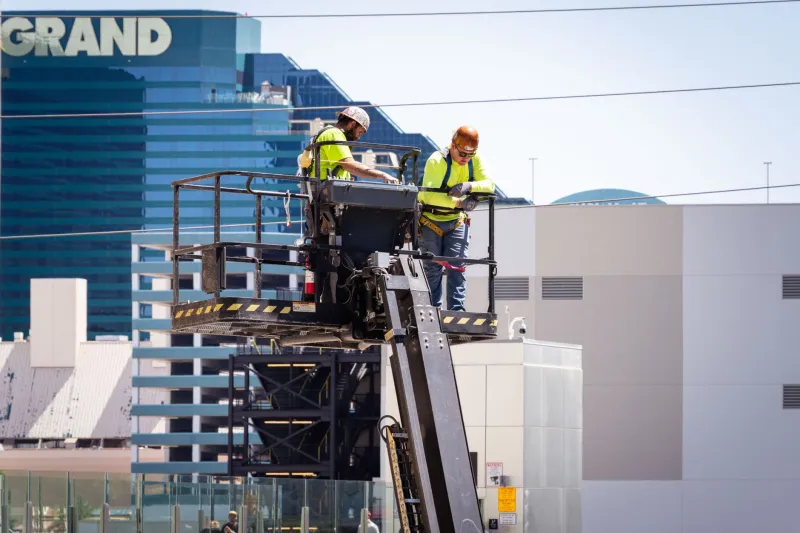
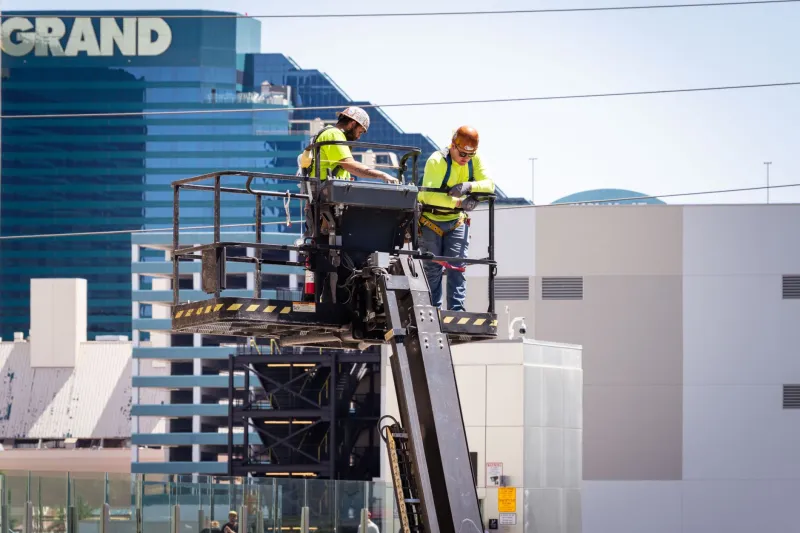
- Fall Protection: Falls are the leading cause of construction fatalities nationally and in Nevada. Verify that fall protection systems (guardrails, personal fall arrest systems, or safety nets) are in place for all work at heights of six feet or more above a lower level.
- Excavation and Trenching Safety: Any excavation five feet or deeper requires a competent person to classify soil and implement appropriate protective systems. Excavations four feet or deeper require a means of egress every 25 feet of lateral travel.
- Scaffold Safety: Scaffolding must be erected, moved, and dismantled under the supervision of a competent person. Inspect all scaffolding before each work shift.
- Silica Exposure Control: Construction activities involving concrete cutting, grinding, or drilling in Nevada's silica-rich soils trigger requirements under 29 CFR 1926.1153. Written exposure control plans and engineering controls (such as wet methods or vacuum dust collection) are mandatory.
- Heat Illness Prevention: NV OSHA's heat illness prevention standard applies to outdoor construction work. Written plans, water, shade, and acclimatization procedures must be in place before temperatures reach 80°F.
- Hazard Communication: Ensure SDS are accessible for all hazardous chemicals on site and that workers receive training on chemical hazards.
- Competent Person Designations: OSHA's construction standards require a designated competent person for numerous activities including scaffolding, excavations, fall protection, and steel erection. Document these designations in writing.
Common Violation Pitfalls: Fall protection deficiencies and scaffold violations consistently top NV OSHA's construction citation list. Employers often underestimate the documentation burden—having the right equipment present is insufficient if competent person inspections are not recorded.
Outdoor Recreation
Nevada's outdoor recreation industry—encompassing guide services, adventure tourism, off-highway vehicle rentals, and wilderness outfitters—has grown substantially as the state markets its public lands and natural attractions. These employers often operate in remote locations with limited emergency response access, creating unique compliance and preparedness challenges.
Compliance Checklist: Outdoor Recreation
- Emergency Response Planning: Given remoteness, written emergency action plans must account for delayed emergency services response. Satellite communication devices and first aid protocols for delayed evacuation are practical necessities.
- Heat Illness Prevention: Outdoor recreation operators working during Nevada's summer months must comply with heat illness prevention requirements and should maintain hydration supplies and shade resources for both staff and clients.
- PPE Programs: Guide and outfitter staff must be provided with and trained on appropriate personal protective equipment for their specific activities—whether that involves water operations, climbing, or off-road vehicle use.
- Vehicle and Equipment Safety: Rental and tour vehicles must meet applicable DOT and state requirements. Conduct documented pre-trip inspections and maintain vehicle maintenance records.
- Dust and Air Quality: Operations in Nevada's desert terrain expose workers to dust hazards. Assess whether respiratory protection is warranted for staff during high-wind or high-activity conditions.
- Licensing and Permitting Compliance: Verify that all required Bureau of Land Management, U.S. Forest Service, or Nevada State Parks operating permits are current and that their safety-related conditions are being met.
- Worker Training Documentation: Ensure that all guides and outdoor staff have documented training in first aid, CPR, and activity-specific safety protocols.
Common Violation Pitfalls: Outdoor recreation employers frequently overlook the formality required for OSHA compliance. Operating in an informal, experience-driven industry culture can lead to undocumented training, informal safety briefings, and absent written programs—all of which create compliance exposure.
A Note on Cross-Sector Compliance
Regardless of industry, several compliance obligations apply universally to Nevada employers: maintaining an OSHA 300 log, posting the annual OSHA 300A summary from February through April, providing a written emergency action plan, and ensuring workers' compensation coverage through the Nevada system. These foundational requirements are frequently overlooked during the operational demands of running a business.
NV OSHA's free On-Site Consultation Program is available to small and medium-sized employers in all of these sectors and provides confidential compliance assistance without the risk of citation. Proactive engagement with this resource is one of the most cost-effective investments a Nevada employer can make in workplace safety.