Ramping Up, Falling Behind: The Compliance Gaps Nevada Businesses Create During Seasonal Workforce Transitions

Nevada's economy does not operate at a steady pace. It accelerates, contracts, pivots, and surges in patterns that are partly predictable and partly driven by forces no single employer controls. Convention season floods Las Vegas with hospitality workers. Summer construction activity peaks along the Reno-Sparks corridor before cooling weather slows exterior work. Ski resorts in the Lake Tahoe region staff up in November and draw down in April. Rural tourism destinations follow their own rhythms, tied to hunting seasons, outdoor recreation calendars, and festival schedules.
For most Nevada employers, these transitions are simply the rhythm of doing business. What many fail to recognize is that each transition creates a distinct window of compliance vulnerability—a period during which the workforce, the regulatory obligations, and the insurance exposure are all in flux simultaneously.
The businesses that navigate these transitions successfully treat them as compliance events, not merely operational ones.
Why Transitions Are Disproportionately Dangerous
The relationship between workforce change and injury risk is well-documented. New and recently returning workers are statistically more likely to experience workplace injuries than their tenured counterparts, regardless of industry. The mechanisms are straightforward: unfamiliarity with specific equipment, uncertainty about emergency procedures, and the social reluctance of newer employees to ask questions or report near-misses.
Seasonal transitions amplify these risks because they compress the onboarding timeline. A hotel ramping up for a major convention may hire dozens of workers in a two-week window. A construction firm resuming a project after a winter pause may bring back a partially different crew than the one that left. In both cases, the institutional knowledge that makes an experienced team safe does not automatically transfer to the reconstituted workforce.
Nevada's Division of Industrial Relations does not distinguish between permanent and seasonal employees when evaluating training adequacy. If a worker was injured performing a task for which they were not properly trained, the fact that they were hired on a temporary basis does not reduce the employer's exposure.
The Training Gap That Hides in Plain Sight
One of the most consistent compliance failures during seasonal ramp-up periods involves the assumption that prior employment history substitutes for current training documentation. An employer rehiring a worker who performed the same role in a previous season may reasonably assume that the worker remembers their training. That assumption is rarely documented, and documentation is what matters when a claim is reviewed.
OSHA standards require that training be appropriate to the specific hazards present in the current work environment. If equipment has changed, procedures have been updated, or the physical configuration of the worksite is different from the prior season, previous training records may not satisfy that standard.
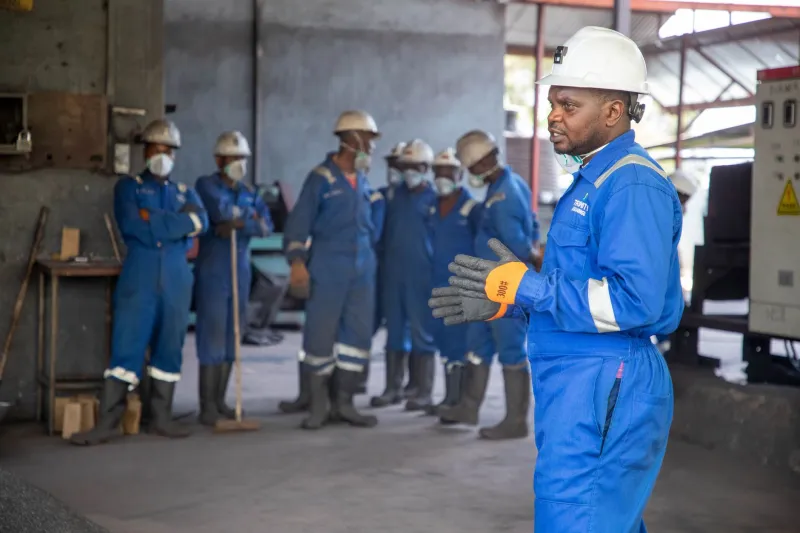
A practical approach is to establish a seasonal return protocol that includes a brief documented refresher for all returning workers, covering any changes made during the off-season. This does not need to be a lengthy process. A one-hour orientation that addresses updated procedures, new equipment, and current emergency response protocols—documented with signatures and dates—creates a defensible record at minimal cost.
For newly hired seasonal workers, the same rigor that applies to permanent hires must apply. Job hazard analyses, equipment-specific training, and acknowledgment of safety policies should be completed before the employee begins performing hazardous tasks, not during the first week on the job.
Insurance Coverage Adjustments Employers Routinely Miss
Workforce transitions have direct implications for insurance coverage that many Nevada employers address too slowly or not at all.
Workers' compensation premium calculations are based in part on payroll exposure. When an employer significantly increases headcount for a seasonal peak, the premium base changes. Failing to notify the insurer of a material change in operations can create coverage disputes if a claim is filed during the transition period. Some policies include provisions that limit coverage for employees who were not reported to the insurer at the time of injury.
General liability and commercial property policies may also contain provisions that are affected by changes in operational scope. A hospitality business that adds a temporary outdoor event venue for peak season, for example, may be adding an exposure that its current policy does not contemplate. The time to clarify that question is before the event, not after a guest sustains an injury.
Employers who use staffing agencies to manage seasonal volume face an additional layer of complexity. The allocation of insurance responsibility between a host employer and a staffing agency is not always clearly defined in the service agreement, and ambiguity in that allocation tends to be resolved through litigation rather than cooperation.
Regulatory Filings and Notification Requirements
Beyond training and insurance, seasonal transitions trigger specific regulatory obligations that Nevada employers frequently overlook.
Employers who cross certain employee count thresholds during peak periods may become subject to requirements that did not apply during slower months. This includes OSHA recordkeeping obligations under 29 CFR Part 1904, which apply to employers with more than ten employees, as well as state-level reporting requirements administered by the Nevada Division of Industrial Relations.
Employers in the construction sector should be particularly attentive to changes in required safety programs when project scope or workforce size changes. Nevada OSHA's construction standards impose specific program requirements based on the nature of the work being performed, and a project that expands in scope during an active season may trigger obligations that were not present at the project's outset.
Seasonal employers who reduce their workforce at the end of a peak period also have obligations worth noting. Final wage payment timelines under Nevada Revised Statutes Chapter 608 apply to seasonal layoffs, and employers who are not familiar with these requirements may find themselves facing wage claim complaints in addition to whatever safety issues preceded the drawdown.
A Practical Transition Checklist
The following framework is not exhaustive, but it addresses the areas where compliance failures most commonly occur during Nevada's seasonal workforce transitions.
Before ramp-up begins:
- Review and update all job hazard analyses to reflect any changes made during the off-season
- Confirm that training documentation templates are current and include required content for each role
- Notify your workers' compensation insurer of the anticipated payroll increase and timeline
- Review your general liability policy for any seasonal exclusions or notification requirements
- Confirm that your staffing agency agreements clearly define insurance and safety responsibility
- Verify that your OSHA 300 log and related recordkeeping systems are active and accessible
During onboarding:
- Complete and document all required training before employees perform hazardous tasks
- Conduct documented refresher sessions for returning seasonal workers
- Assign a designated safety contact who new employees know how to reach
- Establish a clear near-miss reporting process and communicate it during orientation
Before drawdown begins:
- Confirm final wage payment obligations and timelines under Nevada law
- Notify your insurer of the anticipated payroll reduction
- Retain all training and incident documentation for the completed season
- Conduct a post-season review to identify any compliance issues that should be addressed before the next ramp-up
The Transition Is the Risk
Seasonal Nevada employers sometimes view compliance as a static condition—something that is either in place or not. In practice, compliance is a dynamic state that must be actively maintained through periods of change. The transition itself is the period of greatest vulnerability, and the employers who recognize that tend to be the ones who are not explaining gaps to an insurer or a regulator when the season ends.