Caught Without a Plan: Surviving an Unannounced OSHA Inspection When Your Safety Program Is Incomplete
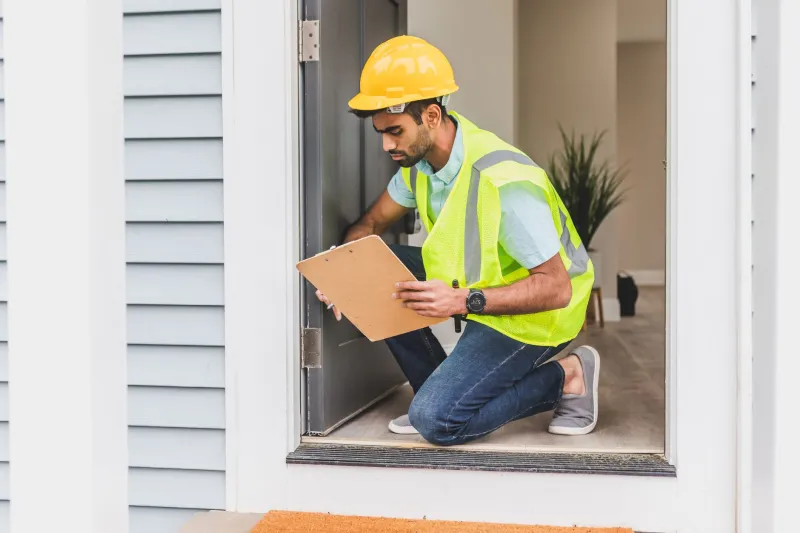
When the Inspector Walks Through the Door
There is no advance notice requirement for most OSHA inspections. A compliance officer can arrive at a Nevada business on any working day, badge in hand, and the employer has very limited grounds to delay entry. For businesses with mature safety programs, this reality is manageable. For businesses that have been operating on informal procedures, institutional memory, and good intentions, an unannounced visit can feel like a crisis.
It does not have to be.
Nevada operates under a State Plan administered by the Nevada Occupational Safety and Health Administration (Nevada OSHA), which means the state has its own compliance officers and enforcement authority that mirrors — and in some areas exceeds — federal OSHA standards. Understanding how those inspections unfold, and what inspectors are actually evaluating, is the first step toward navigating one without catastrophic penalties.
What Inspectors Are Actually Looking For
Compliance officers are trained to assess whether an employer has made genuine, sustained efforts to protect workers — not merely whether a binder of policies sits on a shelf. This distinction matters enormously for businesses that lack formal documentation.
During a typical Nevada OSHA inspection, the officer will conduct an opening conference, a walkaround of the facility, employee interviews, and a closing conference. Each phase presents both risks and opportunities. The walkaround is where physical hazards are identified. Employee interviews are where informal safety culture either supports or contradicts what the employer claims. The opening and closing conferences are where an employer's honesty, responsiveness, and grasp of their own operation are on full display.
Inspectors are not looking for perfection. They are looking for awareness, accountability, and a credible commitment to improvement. An employer who acknowledges gaps and articulates a concrete correction plan will be treated differently than one who claims compliance while inspectors observe obvious hazards.
Rapid Documentation: What You Can Legitimately Compile on Short Notice
If your business has been conducting safety-related activities without formalizing them — toolbox talks, equipment checks, informal training conversations — those activities still count, provided you can reconstruct a reasonable record of them.
Before or during the opening conference, take stock of what documentation you actually have. This may include:
- Equipment maintenance logs or vendor service records showing machinery has been inspected
- Training records such as new-hire onboarding checklists, even if they are not OSHA-specific
- Incident or near-miss reports, however informal, that demonstrate the business tracks workplace events
- Vendor safety data sheets for any chemicals on-site, which satisfy HazCom requirements even without a written program
- Workers' compensation records that reflect injury history and any corrective responses
What you should not do is fabricate, backdate, or inflate records. Nevada OSHA investigators are experienced at identifying documentation created under pressure, and presenting false records transforms a compliance matter into a potential fraud issue. Authentic documentation of imperfect practices is far more defensible than polished documentation of practices that never occurred.
How to Speak Honestly About Gaps Without Volunteering Liability
There is a meaningful difference between transparency and self-incrimination, and every Nevada employer facing an inspection without legal counsel should understand that line.
When an inspector identifies an area where your business lacks a required written program — a hazard communication plan, a lockout/tagout procedure, an emergency action plan — the appropriate response is to acknowledge the gap directly while describing the operational practices that exist in its place. For example: "We do not have a written confined space program. However, we have not permitted entry into that space since last year, and our maintenance contractor handles all work in that area under their own program."
This kind of response demonstrates situational awareness and reduces the inspector's concern that workers are being exposed to unrecognized hazards. It does not eliminate the likelihood of a citation, but it materially affects whether that citation is classified as serious, willful, or other-than-serious — a distinction that can represent tens of thousands of dollars in penalty difference.
Do not speculate about facts you are unsure of. Do not answer questions on behalf of employees. Do not agree to characterizations of your practices that you cannot verify in the moment.
Quick Fixes That Actually Matter During the Inspection Window
Some hazards can be corrected while an inspection is in progress, and doing so is both legally permissible and strategically sound. Nevada OSHA's penalty structure takes immediate abatement into account.
Focus corrective efforts on the most visible and physically immediate hazards:
- Clear blocked emergency exits and ensure exit signage is illuminated
- Secure or label chemical containers that lack proper identification
- Remove tripping hazards from high-traffic walkways
- Ensure required postings are visible, including the Nevada OSHA poster and any active citations from prior inspections
- Confirm first aid supplies are stocked and accessible
These corrections will not eliminate citations for systemic deficiencies, but they reduce the scope of what an inspector documents during the walkaround and signal that management responds to identified hazards rather than waiting for enforcement pressure.
The Closing Conference and What Comes After
At the closing conference, the inspector will outline the apparent violations observed and explain the citation and penalty process. This is not the final determination — it is the beginning of a negotiation period.
Nevada OSHA's informal conference process allows employers to contest proposed citations, present evidence of mitigating circumstances, and negotiate penalty reductions before any formal hearing. Employers who arrive at that informal conference with a documented corrective action plan — even one developed in the days following the inspection — are in a substantially stronger position than those who simply dispute the findings.
For businesses without existing safety programs, an inspection can serve as the forcing function to build one. Drafting a written safety program in the weeks following an inspection, and presenting that program at the informal conference as evidence of good-faith abatement, has consistently resulted in reduced penalties in Nevada OSHA proceedings.
Building Toward a Program That Doesn't Leave You Exposed
The most practical lesson an unannounced inspection teaches is that informal safety practices carry hidden costs. They are difficult to document, hard to defend, and invisible to regulators until something goes wrong.
Nevada OSHA offers free consultation services through its Safety Consultation and Training Section, which operates separately from enforcement. These consultants can help small businesses identify hazard exposures and develop written programs without triggering an enforcement response. Engaging that resource proactively — before the next inspection — is among the most cost-effective investments a Nevada employer can make.
No business is required to have a perfect safety program on day one. What Nevada OSHA expects is evidence of genuine effort, honest acknowledgment of deficiencies, and a credible path toward compliance. An unannounced inspection, handled with transparency and preparation, does not have to define a business. It can, if approached correctly, be the moment a business begins to build something durable.