Turned Down: A Nevada Employer's Guide to Occupational Noise Hazards and Hearing Conservation
Hearing loss does not announce itself. It accumulates quietly—shift by shift, year by year—until a worker realizes they can no longer follow a conversation in a quiet room. For Nevada employers operating in high-noise environments, that slow erosion represents not only a serious health outcome for employees but also a significant compliance liability under federal and state occupational safety law.
Nevada's economy spans industries that rank among the loudest in the nation. Construction crews grade land for new developments in the Las Vegas Valley. Airport ground crews work within earshot of jet engines at Harry Reid International. Manufacturing workers operate heavy presses and pneumatic tools in Sparks and Henderson. Entertainment and hospitality employees endure sustained amplified sound in concert venues, nightclubs, and casino gaming floors. Each of these environments carries measurable risk—and each comes with specific obligations employers cannot afford to overlook.
What the Numbers Actually Mean
OSHA's permissible exposure limit (PEL) for occupational noise is 90 decibels averaged over an eight-hour workday, with a 5-decibel exchange rate—meaning that for every 5 dB increase above 90, the allowable exposure time is cut in half. At 95 dB, workers may be exposed for no more than four hours. At 100 dB, two hours. The action level that triggers mandatory hearing conservation program requirements is set lower, at 85 dB time-weighted average (TWA).
To put those figures in context: a standard jackhammer operates at approximately 100 dB. A commercial kitchen with industrial dishwashers and ventilation systems can hover around 85–90 dB. A nightclub or concert venue may expose workers to sustained levels well above 100 dB. Aircraft ground support equipment commonly exceeds 110 dB. These are not edge cases—they are everyday conditions for tens of thousands of Nevada workers.
OSHA's Hearing Conservation Standard: What Nevada Employers Must Do
For workplaces where noise exposure at or above the 85 dB TWA action level is reasonably anticipated, OSHA's Hearing Conservation Amendment (29 CFR 1910.95) requires employers to implement a written hearing conservation program. The core components of that program include the following:
Noise monitoring: Employers must conduct sound level measurements to identify workers whose exposures may equal or exceed the action level. Monitoring must be repeated whenever changes in production, equipment, or controls may increase noise exposure.
Audiometric testing: Baseline audiograms must be established within six months of an employee's first exposure at or above the action level. Annual audiograms are required thereafter. When a standard threshold shift is detected—defined as an average change of 10 dB or more in hearing sensitivity at 2,000, 3,000, and 4,000 Hz—employers must notify affected workers in writing within 21 days.
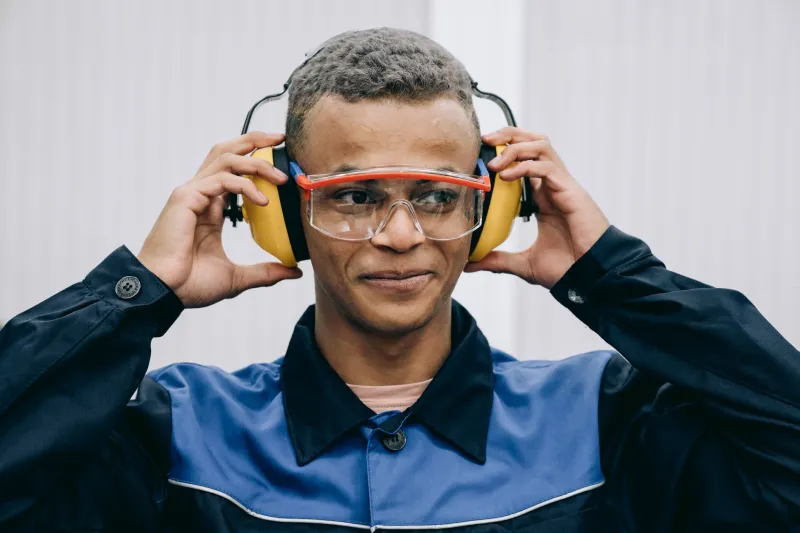
Hearing protection: Employers must make a variety of hearing protectors available at no cost to employees exposed at or above the action level. When engineering controls are not feasible or sufficient, personal protective equipment becomes the primary line of defense.
Training: Annual training is required for all workers included in the hearing conservation program. Training must cover the effects of noise on hearing, the purpose and proper use of hearing protectors, and the audiometric testing process.
Recordkeeping: Noise exposure measurement records must be retained for two years. Audiometric test records must be kept for the duration of the affected employee's employment.
Nevada operates its own state OSHA plan through the Nevada Occupational Safety and Health Administration (Nevada OSHA), which enforces standards that are at least as effective as federal OSHA requirements. Employers should consult Nevada OSHA's current administrative codes alongside federal standards to ensure full compliance.
Industry-Specific Considerations in Nevada
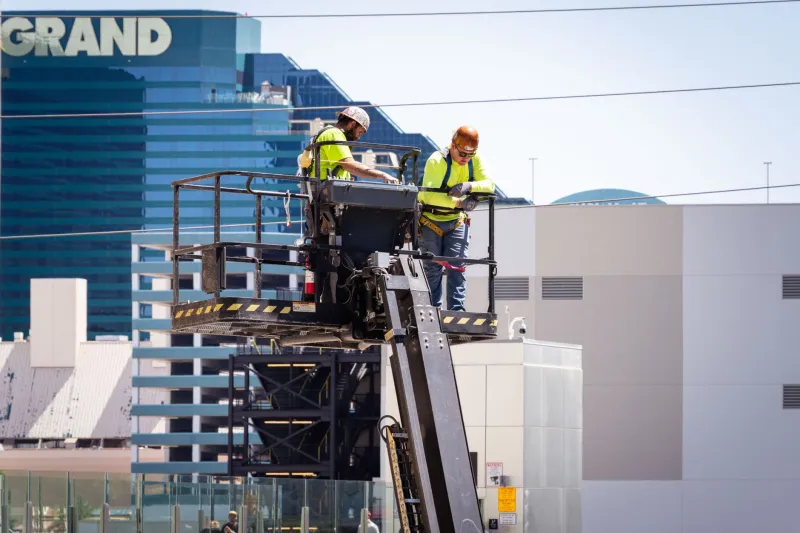
Construction: Nevada's sustained construction boom—particularly in Clark County—keeps large crews operating heavy equipment, compactors, and pneumatic tools for extended periods. Because construction workers frequently move between job sites and tasks, noise exposure assessments must account for variable daily conditions. Employers should conduct task-based monitoring and ensure that hearing protection is readily available at all active work zones where noise levels may fluctuate above threshold.
Entertainment and Hospitality: Casino floors, nightclubs, and live music venues present a nuanced challenge. Workers in these environments—including dealers, cocktail servers, security personnel, and audio technicians—may not perceive themselves as working in a hazardous environment. Yet sustained exposure to amplified music and gaming machine noise can easily exceed permissible limits over the course of a shift. Employers in this sector should conduct periodic sound level surveys across different areas of their facilities and consider engineering controls such as sound-absorbing wall panels, equipment enclosures, and strategic placement of workstations.
Airport Operations: Ground crew personnel at Harry Reid International and Reno-Tahoe International Airport face some of the highest noise exposures of any Nevada workforce. Jet engine runup and taxiing aircraft can produce noise levels of 130 dB or more at close range. Aviation employers must implement robust hearing protection programs and ensure that double protection—both earplugs and earmuffs—is used when noise levels exceed 105 dB.
Manufacturing: Sparks and the broader Reno-Sparks metro area host a range of manufacturing operations where metal stamping, cutting, and conveyor systems generate persistent high-level noise. Engineering controls—such as isolating loud machinery, installing vibration dampening mounts, and enclosing noise sources—should be evaluated before defaulting to hearing protection alone. OSHA's hierarchy of controls places engineering solutions above reliance on PPE.
Selecting and Fitting Hearing Protection Effectively
Noise reduction ratings (NRR) printed on hearing protector packaging represent laboratory performance under ideal conditions. Real-world attenuation is typically lower. OSHA recommends that employers derate NRR values by 50 percent when calculating effective protection levels. Fit testing and training on proper insertion technique are essential, particularly for foam earplugs, which are frequently worn incorrectly.
Employers should offer multiple styles of hearing protection—including foam earplugs, pre-molded earplugs, semi-aural devices, and earmuffs—to accommodate different preferences and anatomical differences among workers. Compliance improves when employees have genuine choice in what they wear.
A Compliance Checklist for Immediate Action
Employers who are uncertain about their current standing can use the following checklist as a starting point:
- Conduct or review most recent noise monitoring survey for all applicable work areas
- Verify that all workers exposed at or above 85 dB TWA are enrolled in the hearing conservation program
- Confirm baseline and annual audiograms are current for enrolled workers
- Review audiometric records for any standard threshold shifts requiring written notification
- Audit hearing protector inventory to ensure adequate supply and variety
- Verify that annual training has been completed and documented for the current year
- Review recordkeeping files for completeness and retention compliance
- Evaluate whether engineering or administrative controls can reduce noise at the source
Hearing loss is irreversible. The regulatory framework exists precisely because market forces alone have historically failed to protect workers from this particular hazard. For Nevada employers, compliance is not simply about avoiding citations—it is about maintaining a workforce that can perform safely and communicate effectively for the duration of a career.