Locked In and Left Out: What Nevada Employers Must Know About Confined Space Entry Before Someone Gets Hurt
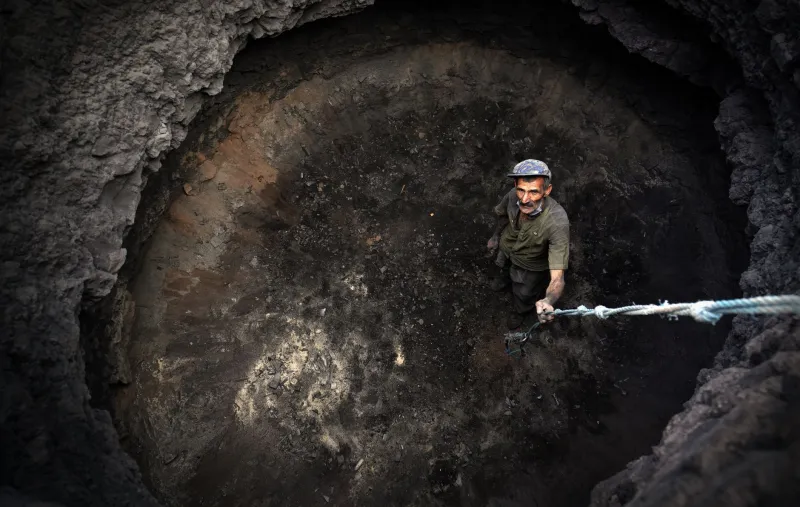
Nevada's industrial landscape is unlike almost any other state's. From the deep mine shafts of Elko County to the sprawling irrigation networks of the Humboldt Valley and the underground utility corridors beneath Las Vegas's resort district, workers across the Silver State routinely enter spaces that most people would never consider stepping foot in. These environments share one defining characteristic: they are not designed for continuous occupancy, and that distinction carries serious legal and life-safety implications.
Confined space fatalities are disproportionately tragic for one reason—they often claim rescuers as well as the original victims. When an employer fails to establish a proper confined space program, the instinct to help a fallen coworker can create a cascading emergency. Understanding OSHA's framework and Nevada-specific operational realities is not optional for employers in high-risk sectors. It is a baseline obligation.
What Makes a Space "Confined" Under Federal and Nevada Standards
OSHA's general industry standard (29 CFR 1910.146) and its construction counterpart (29 CFR 1926 Subpart AA) define a confined space as any area large enough for a worker to enter and perform assigned work, with limited means of entry or exit, and not designed for continuous occupancy. Storage tanks, mine adits, pump stations, manholes, grain silos, and underground vaults all fit this definition.
However, the critical regulatory distinction lies between a confined space and a permit-required confined space (PRCS). A space becomes permit-required when it contains or has the potential to contain a serious hazard, such as a hazardous atmosphere, material that could engulf an entrant, an internal configuration that could trap or asphyxiate a worker, or any other recognized serious safety or health hazard.
In Nevada's mining sector, the distinction is especially significant. Many mine shafts and processing facilities contain both oxygen-deficient zones and the potential for toxic gas accumulation—conditions that demand a full permit system, not a casual work order.
The Permit System: More Than Paperwork
A confined space entry permit is a living safety document, not a bureaucratic formality. OSHA requires that permits include the location and purpose of entry, the date and authorized duration, the names of authorized entrants and attendants, the hazards identified, the methods used to isolate the space, the acceptable entry conditions based on atmospheric testing, the rescue and emergency services available, and the communication procedures between entrant and attendant.
For Nevada employers, the temptation to treat permits as a checkbox exercise is a costly mistake. OSHA inspectors have consistently cited employers for permits that were completed after the fact, signed without actual atmospheric testing, or issued without identifying all relevant hazards. Each of these failures represents not just a regulatory violation but a failure of the system's core protective purpose.
Permits must be posted at the entry point for the duration of the job and retained for at least one year to allow OSHA to review the program's effectiveness.
Atmospheric Testing: The First Line of Defense
The atmosphere inside a confined space can change rapidly and without warning. In Nevada's agricultural sector, decomposing organic matter in irrigation sumps and manure storage pits generates hydrogen sulfide—a gas that paralyzes the sense of smell at high concentrations, giving workers no sensory warning before incapacitation. In underground utility vaults, oxygen displacement from leaking natural gas lines is an ever-present threat.
OSHA requires that the atmosphere of a permit space be tested before entry and continuously monitored during occupancy. Testing must occur in the following sequence: oxygen content first, then flammable gases and vapors, then toxic air contaminants. The sequence matters because many instruments' readings are affected by oxygen levels.
Acceptable entry conditions generally require:
- Oxygen concentration between 19.5% and 23.5%
- Flammable gas or vapor concentration below 10% of the lower explosive limit (LEL)
- Toxic contaminant levels below applicable OSHA permissible exposure limits (PELs)
Equipment must be calibrated according to manufacturer specifications and appropriate for the specific hazards anticipated. A gas monitor calibrated for methane will not reliably detect hydrogen sulfide—a distinction that has contributed to fatalities in agricultural and wastewater settings.
Roles and Responsibilities: Entrant, Attendant, and Entry Supervisor
OSHA's confined space standard assigns specific duties to three distinct roles, and each must be filled by a trained, designated individual.
The authorized entrant must know the hazards associated with the space, understand the warning signs of exposure, use assigned equipment properly, communicate regularly with the attendant, and exit immediately upon instruction or when warning signs appear.
The attendant must remain outside the space at all times during entry, maintain continuous communication with entrants, track who is inside, monitor conditions both inside and outside the space, and—critically—never enter the space to attempt a rescue without being specifically trained and authorized to do so.
The entry supervisor verifies that conditions are acceptable before authorizing entry, ensures the permit is complete, oversees the operation, and cancels or suspends entry when conditions change.
In smaller Nevada operations, particularly in agricultural or rural utility settings, employers sometimes assign one person to cover multiple roles or allow the attendant to perform other tasks while workers are inside. Both practices are direct OSHA violations and dramatically increase risk.
Rescue Planning: The Gap That Gets Workers Killed
OSHA requires that employers either designate a trained rescue team or contract with an external rescue service before any permit-required entry occurs. The rescue arrangement must be evaluated for capability, response time, and equipment.
For Nevada's remote mining and agricultural operations, relying solely on local emergency services may not satisfy this requirement. A rural county fire department may be 45 minutes away and may not carry the atmospheric monitoring equipment or confined space rescue gear required for a safe extraction. Employers in these settings must honestly assess whether their rescue plan is viable—not just documented.
Non-entry rescue, using mechanical retrieval systems such as tripods and winches, is OSHA's preferred method when feasible. Retrieval equipment must be in place before entry begins, not retrieved from storage if an emergency occurs.
Common Compliance Gaps Nevada Employers Should Address Now
Based on OSHA inspection patterns and industry reporting, several deficiencies appear repeatedly in Nevada workplaces:
- Failure to identify all confined spaces on the property. Many employers focus on obvious spaces like tanks and vaults but overlook pits, trenches, and enclosed equipment chambers.
- Inadequate training documentation. OSHA requires that training be documented and that records include the employee's name, the trainer's signature, and the date. Informal on-the-job instruction without records does not satisfy this requirement.
- Missing or incomplete permits. Permits signed without actual atmospheric readings are among the most commonly cited violations.
- No written confined space program. OSHA requires a written program for any employer with permit-required spaces. Verbal policies do not comply.
- Rescue plans that exist only on paper. A rescue plan that names a service provider without confirming that provider's capability and availability is not a functional plan.
Building a Compliant Program in Nevada's Operational Context
Developing a confined space program that works in practice requires more than downloading a template. Nevada employers should conduct a thorough walkthrough of all facilities to identify every potential confined space, classify each space, and develop site-specific entry procedures that reflect the actual hazards present.
Training should be conducted in the language workers understand and repeated whenever conditions change, workers are reassigned, or the employer has reason to believe the program is not being followed. In Nevada's diverse workforce—particularly in agriculture and construction—bilingual training materials are often not just a courtesy but a practical necessity.
For operations with multiple sites, a centralized permit system with site supervisors authorized to issue permits ensures consistency without creating bottlenecks that pressure workers to skip steps.
Confined space compliance is not an area where Nevada employers can afford to learn through enforcement actions. The hazards are too immediate, and the consequences too permanent.